Ten Years Ago Today, item 9

Edit transcription:
...
Transcription saved
Enhance your transcribing experience by using full-screen mode

Transcription

You have to be logged in to transcribe. Please login or register and click the pencil-button again

2

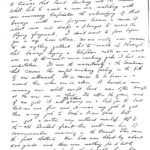
of dauntless courage. The rescue of a wounded comrade

under fire may show us the Lights of heroism.

a man’s self abnegation in support of his country

even to the last great sacrifice may be pointed out

as the glories of warfare. But these actions although

part and parcel of war are yet not War.

                The reasons which plunge nations into the maelstrom

may be sound and true. The object of the war may

be righteous. It was right that England should

take up the challenge in 1914 against the violation

of Belgium. But the method of executing the

challenge must always be horrible whether it is

conducted by flashing swords and red-coats or whether

by khaki-clad mud-begrimed men in gas masks.

                The killing of one’s fellow man is an act

that requires man to descent to the mentality of a

beast, and yet it is not this killing that is the main

horror of war. Death is always lurking at one’s elbow.

we become accustomed to seeing men die. No, it

is the fearful conditions under which men are forced

to live, the maimed, the blinded, the gas stricken.

the raving shell-shock cases that are so horrible.

                Then think of the conditions of the women-folk

at home. The ceaseless anxiety, the waiting, the uncertainty.

the conditions at the front are bad, the mental agony

of the women is worse. I cannot tell you all of

the horrors of those days. Fortunately the historians,

the novelists and writers of the period following the

war were not obsessed by any of the “glory” of war,

and they wrote of things as they were.

Transcription saved

2

of dauntless courage. The rescue of a wounded comrade

under fire may show us the Lights of heroism.

a man’s self abnegation in support of his country

even to the last great sacrifice may be pointed out

as the glories of warfare. But these actions although

part and parcel of war are yet not War.

                The reasons which plunge nations into the maelstrom

may be sound and true. The object of the war may

be righteous. It was right that England should

take up the challenge in 1914 against the violation

of Belgium. But the method of executing the

challenge must always be horrible whether it is

conducted by flashing swords and red-coats or whether

by khaki-clad mud-begrimed men in gas masks.

                The killing of one’s fellow man is an act

that requires man to descent to the mentality of a

beast, and yet it is not this killing that is the main

horror of war. Death is always lurking at one’s elbow.

we become accustomed to seeing men die. No, it

is the fearful conditions under which men are forced

to live, the maimed, the blinded, the gas stricken.

the raving shell-shock cases that are so horrible.

                Then think of the conditions of the women-folk

at home. The ceaseless anxiety, the waiting, the uncertainty.

the conditions at the front are bad, the mental agony

of the women is worse. I cannot tell you all of

the horrors of those days. Fortunately the historians,

the novelists and writers of the period following the

war were not obsessed by any of the “glory” of war,

and they wrote of things as they were.


Transcription history
  • December 9, 2016 20:16:29 Sue Bryant

    2

    of dauntless courage. The rescue of a wounded comrade

    under fire may show us the Lights of heroism.

    a man’s self abnegation in support of his country

    even to the last great sacrifice may be pointed out

    as the glories of warfare. But these actions although

    part and parcel of war are yet not War.

                    The reasons which plunge nations into the maelstrom

    may be sound and true. The object of the war may

    be righteous. It was right that England should

    take up the challenge in 1914 against the violation

    of Belgium. But the method of executing the

    challenge must always be horrible whether it is

    conducted by flashing swords and red-coats or whether

    by khaki-clad mud-begrimed men in gas masks.

                    The killing of one’s fellow man is an act

    that requires man to descent to the mentality of a

    beast, and yet it is not this killing that is the main

    horror of war. Death is always lurking at one’s elbow.

    we become accustomed to seeing men die. No, it

    is the fearful conditions under which men are forced

    to live, the maimed, the blinded, the gas stricken.

    the raving shell-shock cases that are so horrible.

                    Then think of the conditions of the women-folk

    at home. The ceaseless anxiety, the waiting, the uncertainty.

    the conditions at the front are bad, the mental agony

    of the women is worse. I cannot tell you all of

    the horrors of those days. Fortunately the historians,

    the novelists and writers of the period following the

    war were not obsessed by any of the “glory” of war,

    and they wrote of things as they were.

Description

Save description
    Location(s)
    Login and add location


    ID
    5199 / 58814
    Source
    http://europeana1914-1918.eu/...
    Contributor
    Michael John Hoy
    License
    http://creativecommons.org/licenses/by-sa/3.0/


    Login to edit the languages

    Login to edit the fronts

    Login to add keywords

    Login and add links

    Notes and questions

    Login to leave a note